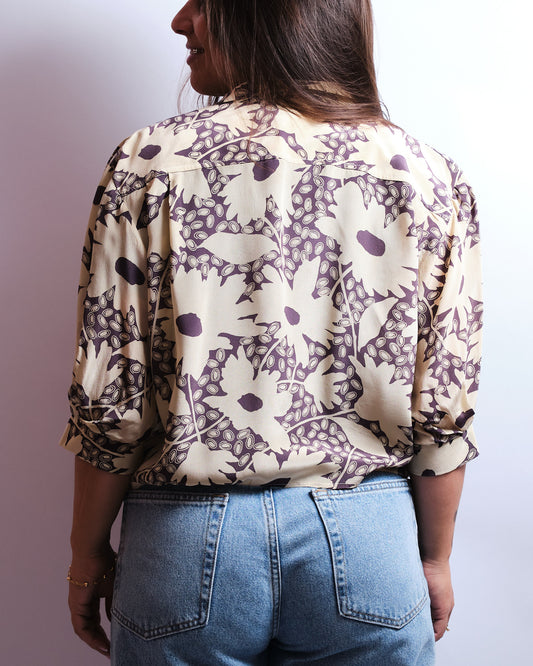
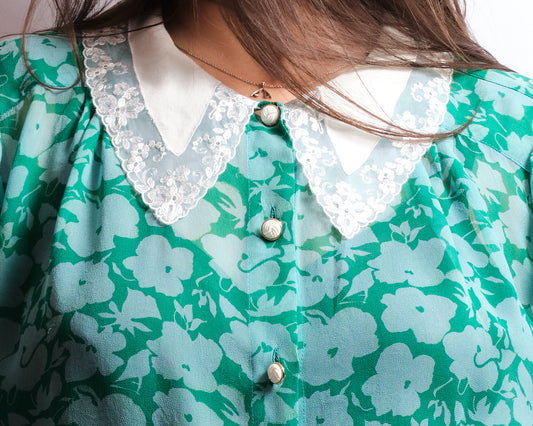
Have vintage clothes become too expensive?
Share
What if we actually asked the question of price?
"It used to be cheaper..."
This is a remark we hear more and more often:
"Vintage was cool when it was affordable. Now it costs almost as much as a new garment!"
It's true: prices have changed. But does that mean vintage has become "too expensive"? To understand, we need to look at what's really behind a vintage garment.
1. What you pay for (and what you don't see)
A vintage garment sold in a shop is not just "some old thing we found in a cellar".
Here's everything that's behind it :
- Research & sourcing : excavations, flea markets, dormant stock lots…
- Sorting & cleaning : sometimes hours to identify, wash, remove stains, repair.
- Restoration : sewing, adjusting, ironing, refurbishing a piece sometimes forgotten for 30 years.
- Selection : style, cut, material, trend. We don't sell "everything" we find.
- Presentation & enhancement : shooting, retouching, online posting, description, precise measurements, shipping…
And what about a physical store? There's also the rent, the overhead, the time spent with each customer…
👉 In short, every vintage garment sold has been carefully transformed to become desirable and wearable today . This isn't clearance sales: it's a real profession.
2. A vintage garment also has another quality
When you buy vintage, you are often paying for a quality that is far superior to that of new items today.
- Sustainable fabrics (virgin wool, thick cotton, natural silk)
- Solid finishes (hand-sewn buttons, interior linings, beautiful cuts)
- A unique piece, already proven by time
🔥 Result: A well-cut 80s blazer can last another 20 years. How long does a CHF 29.90 fast-fashion jacket last?
3. The true price of ethics
Buying vintage is not "buying old", it's buying differently .
It means saying no to waste, no to overproduction, no to inhumane working conditions.
And yes, ethics come at a price.
But this price is often lower than the real cost of disposable fashion (environmental, social, emotional).
4. Let's compare for real
| Product | Price | Estimated lifespan | Impact |
|---|---|---|---|
| fast fashion jeans | 39 CHF | 1 year | Negative (materials, production, disposable) |
| Vintage Levi's 501 jeans | 59 CHF | 10+ years | Positive (reused, solid, already amortized) |
👉 Is it really more expensive… or is it simply fairer ?
Conclusion: Expensive or precious?
Vintage clothing is not "expensive" on a whim. It has a history, a value, a transformation.
What you are buying is more than just a price : it's a process, a unique piece, a conscious choice.
At Mes Épaulettes , each garment is selected, restored, and enhanced so that you can wear something exceptional every day, not a costume, not something outdated: something real, strong, and durable.